Joseph McClusky grew up inside conservative Republican politics. His journey out began when two immigrant classmates asked him a question he couldn’t answer. In 2026, he defeated a Republican incumbent in one of Michigan’s longest-standing GOP strongholds.
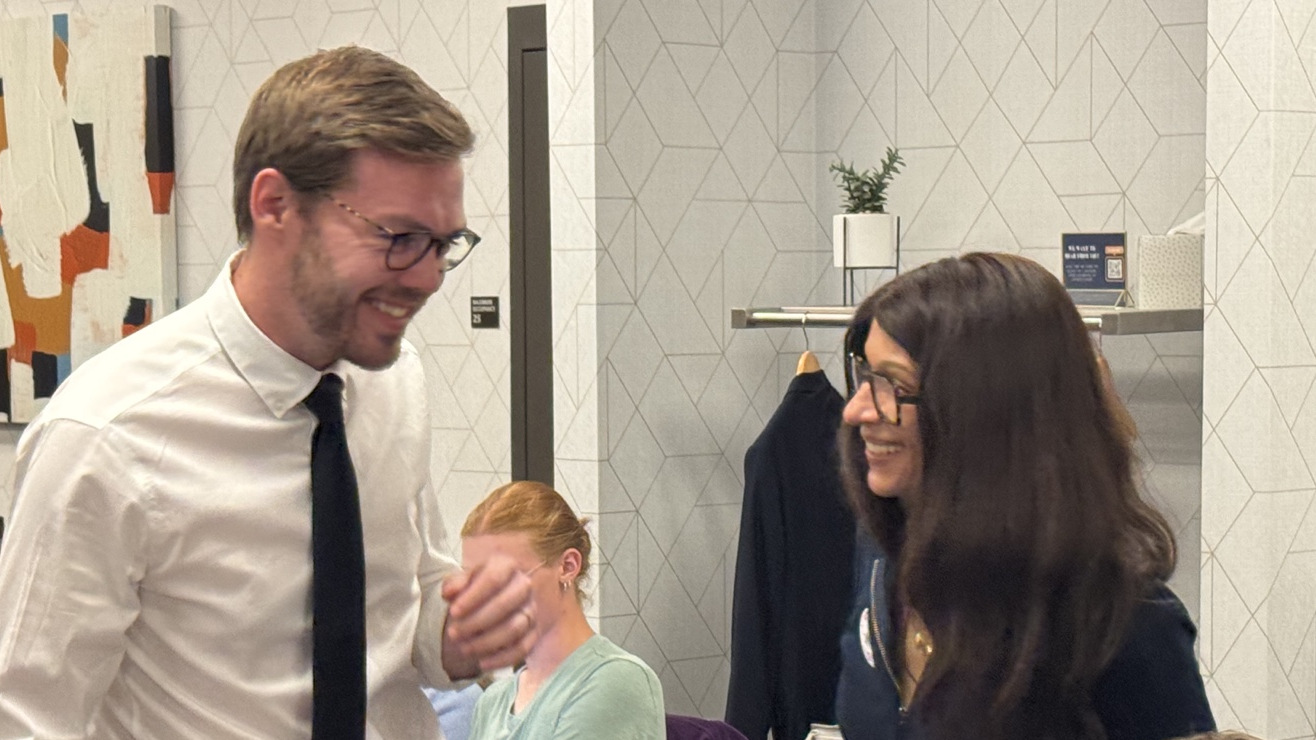
At 11 years old, Joseph McClusky saw an Obama bumper sticker outside his church and wondered what a Democrat was doing there.
Eighteen years later, he was celebrating inside an Irish pub in downtown Holland, Michigan, after defeating Republican state Rep. Nancy DeBoer. McClusky, now 29, had flipped a district represented by Republicans for decades. According to his election-night speech, his victory delivered the 56th seat Democrats needed to reclaim the Michigan House.
His transformation began long before he became a candidate.
McClusky grew up attending a Baptist school whose motto was “Training Soldiers for Christ.” At Hope College, he ran for president of the campus Republican organization. He attended the 2016 Republican National Convention in Cleveland as a guest of Michigan’s delegation.

But during his freshman year, he watched a Republican presidential debate with two international students. When the candidates turned to immigration, his friends challenged him over the party’s rhetoric about people like them.
He recalled the encounter in a 2025 Ottawa News Network interview.
“I didn’t have a good answer.”
The question stayed with him.
At the 2016 Republican convention, McClusky watched delegates boo Ted Cruz after the Texas senator urged them to vote according to their conscience rather than simply endorse Donald Trump. He had believed he could remain a Republican without supporting Trump. Watching the crowd, he began questioning whether the party would tolerate that distinction.
In 2017, he attended the Women’s March in Washington, followed a month later by the Conservative Political Action Conference. At CPAC, when a speaker suggested deporting every immigrant was impractical, an audience member shouted, “Why not?”
McClusky was still conservative enough to feel uncomfortable with some speakers at the Women’s March. But the reaction at CPAC unsettled him for a different reason.
During his senior year, he came out as gay. He recalled looking at the party he had grown up supporting and concluding that “there’s no space for me there.”
His change in affiliation took years, multiple political gatherings, friendships and personal experiences. He began working on Democratic campaigns, including Larry Jackson’s unsuccessful 2022 attempt to unseat DeBoer.

Four years later, he ran against her himself.
In 2011, while serving on Holland’s City Council, she voted against extending the city’s anti-discrimination protections to LGBTQ+ residents. DeBoer argued that such a socially contentious decision should be made by the public rather than nine council members. Michigan Public documented the vote and her explanation at the time.
Holland ultimately adopted those protections in August 2020, after DeBoer had lost her mayoral reelection bid.
DeBoer subsequently won a seat in the Michigan House in 2022 and held it in 2024 with 56.1% of the vote. She pursued education legislation, including literacy reforms, and campaigned again in 2026 on child care, housing and schools.
The local political movement supporting her, however, was still delivering a much more familiar national message.
In October, Ottawa Impact Freedom PAC’s voter guide endorsed DeBoer while warning that Democrats were embracing “progressive Marxist ideology.” The organization, which had lost its majority on the county commission to other Republicans in 2024, urged voters to elect Republican candidates from local offices to Washington.
The guide offered a sweeping ideological warning. McClusky was asking residents about their grocery bills, health care, housing costs and government accountability.
According to a 2025 Pew Research Center survey, 57% of Republicans and Republican-leaning independents regularly get news from Fox News—more than twice the share who regularly use any other individual source surveyed.
A randomized experiment published in The Journal of Politics found that regular Fox News viewers who were paid to watch CNN for a month learned information they otherwise had been less likely to encounter and moderated some of their issue positions. Their partisan identities did not simply disappear.
The experiment cannot explain McClusky’s victory. Nor does it establish what news sources Holland voters consumed.
But McClusky’s own history illustrates how exposure to people and perspectives outside a familiar political narrative can challenge beliefs that once seemed unquestionable.
He did not encounter immigration as an abstraction during that college debate. Two friends were sitting beside him, asking him to explain what he supported.
His 2026 campaign also depended on conversations. McClusky said he had knocked on more than 50,000 doors and regularly encountered lifelong Republicans looking for an alternative.
He was campaigning in a district with a substantial Latino electorate, where both candidates reached voters in English and Spanish. Michigan Public reported concerns among local Latino voters about health care costs and access to services. Without precinct-level analysis, the size of their contribution to McClusky’s victory remains undetermined.
His campaign promised affordable housing, better health care access, fully funded public schools and greater transparency in Lansing. One specific commitment was to bring the Legislature and governor’s office under Michigan’s Freedom of Information Act.
Those promises can now be measured against legislation, budgets and public records.
In 2011, Holland’s City Council declined to extend legal protections to LGBTQ+ residents, with DeBoer voting against the proposal.
In 2020, the city enacted those protections.
On November 3, 2026, voters in the surrounding House district elected an openly gay former Republican to represent them in Lansing.
McClusky had spent years questioning beliefs he once considered settled. Two college friends had challenged him. He had listened, reconsidered, and eventually knocked on more than 50,000 doors asking other people to listen to him.
Now he will represent neighbors who voted for him and neighbors who still believe much of what he once believed. His challenge is to offer them the same opportunity that changed his life: a conversation in which someone can change their mind without losing their place in the community.
When he was 11, McClusky saw an Obama bumper sticker outside his church and wondered what a Democrat was doing there.
Eighteen years later, Holland gave him an answer.
They were his neighbors all along.